




Note: All market prices are as of 11 September 2026. The FOMC decision lands on 16 September, two days after Stage 1 of Political Markets Season closes.
1. The whole distribution, in one place
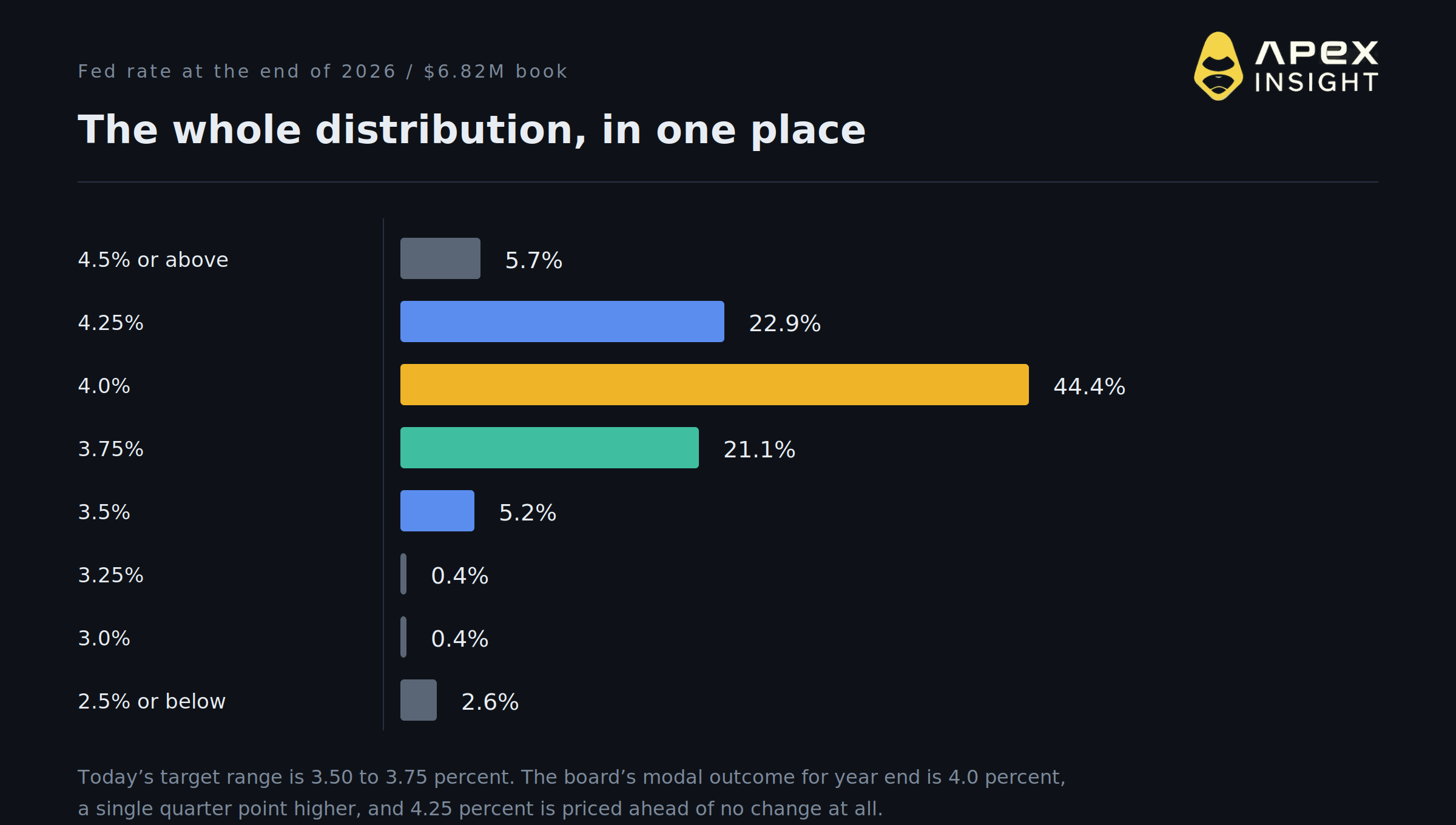
4.0 percent prices at 44.4 percent. 4.25 percent at 22.9 percent. 3.75 percent at 21.1 percent. 3.5 percent at 5.2 percent, and 4.5 percent or above at 5.7 percent.
Below that it falls away to nothing: 3.25 percent, 3.0 percent and 2.75 percent each price at 0.4 percent.
The shape matters as much as the leader. There is no second hump, no cluster at a lower level representing a policy reversal later in the year. It is one peak, slightly above where we are now.
2. The modal outcome is one hike and stop
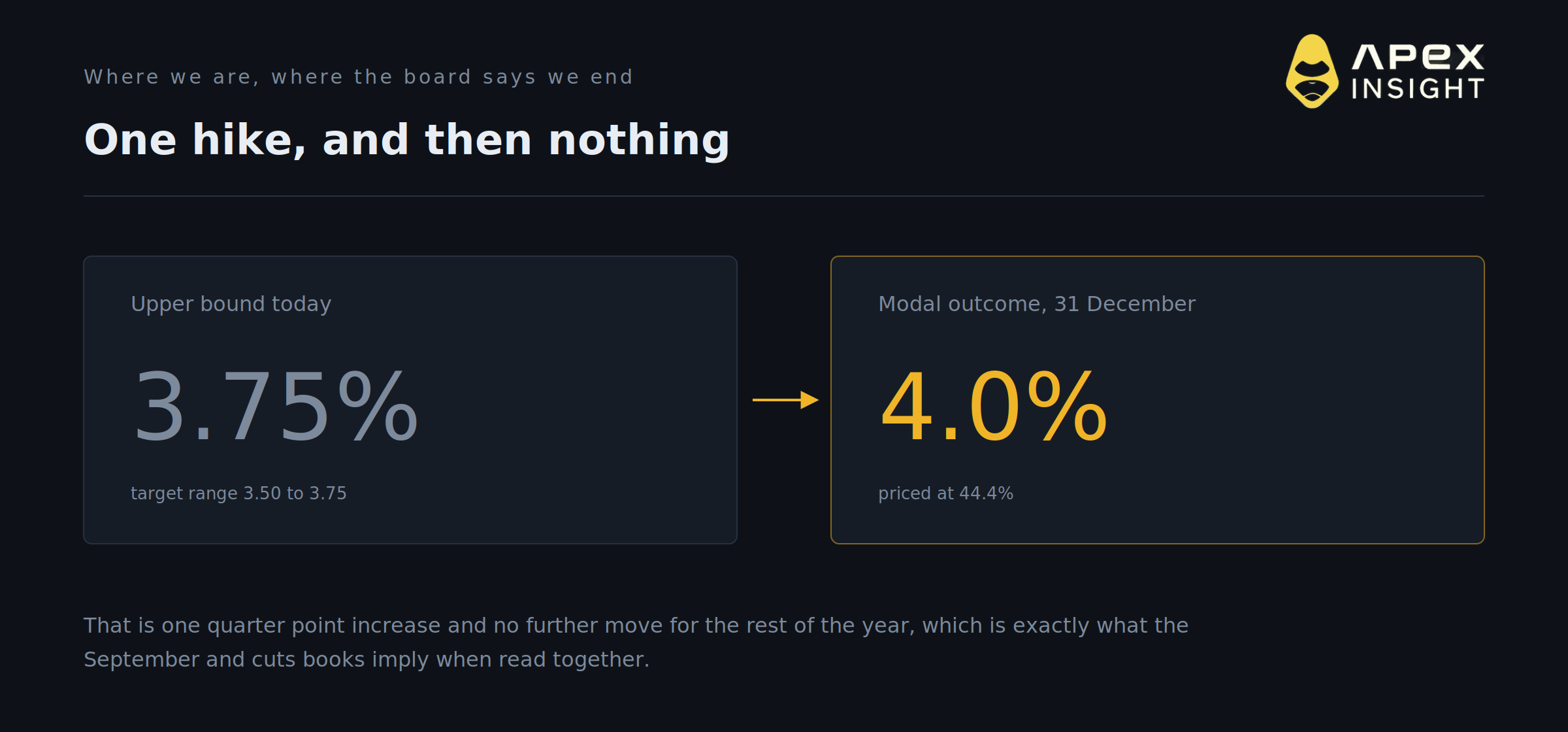
The current target range is 3.50 to 3.75 percent. The board's most likely year-end outcome is 4.0 percent.
That is a single quarter point increase, and then nothing for the remaining three and a half months.
It is worth being precise about what that implies. It is not a tightening cycle. It is one move, most likely next Tuesday, followed by a hold through the rest of the year. A market pricing a hawkish turn would put weight on 4.25 and 4.5 percent. This one puts 44.4 percent on stopping immediately after the first step.
3. Eighty-eight percent inside half a point
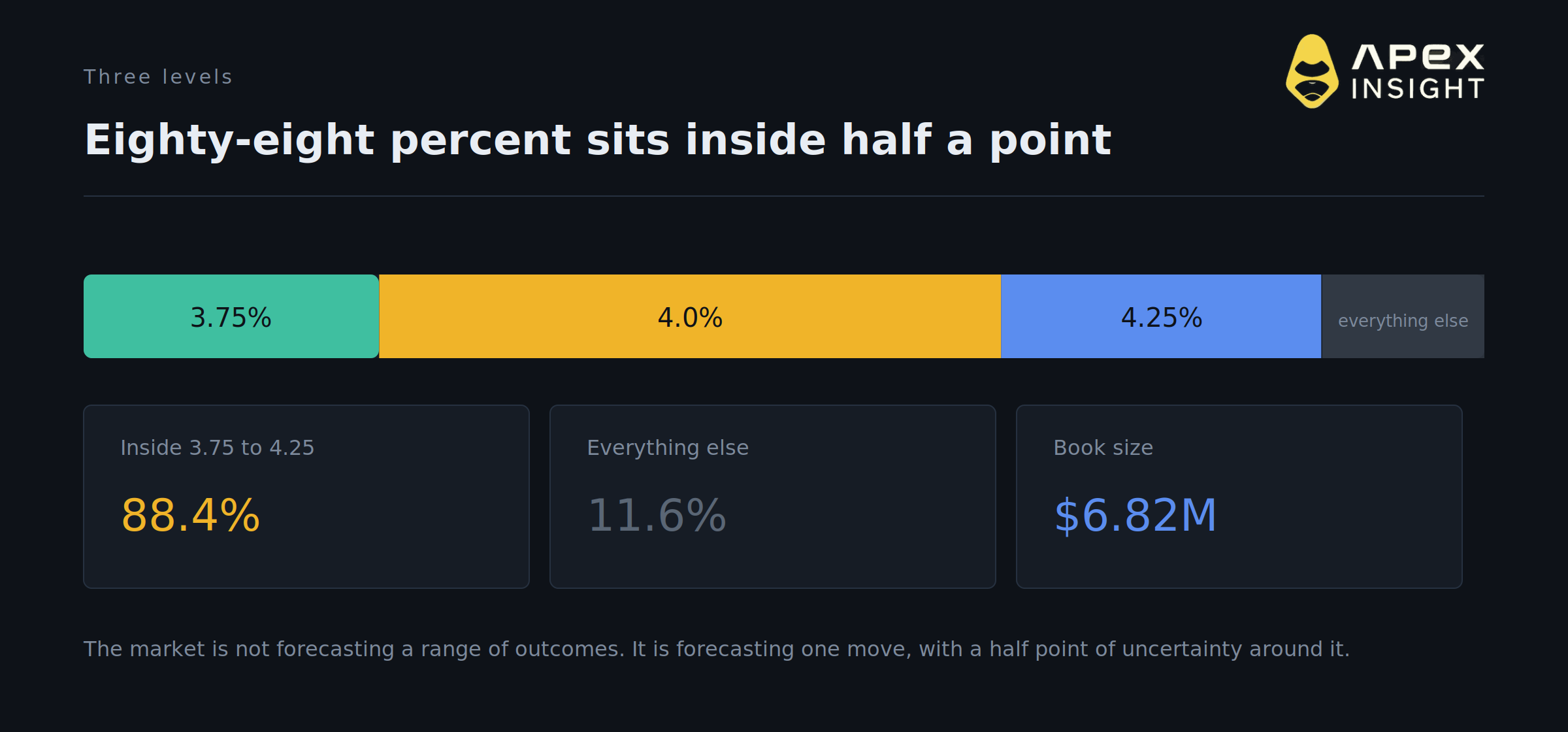
3.75, 4.0 and 4.25 percent account for 88.4 percent of the probability between them. Everything else on the board, nine separate levels, shares the remaining 11.6 percent.
For a forecast three and a half months out, on a policy rate that has moved in both directions this cycle, that is a narrow distribution. It tells you the market considers the path close to determined and the remaining uncertainty to be about one meeting, not about the direction of policy.
4. The biggest position is on the outcome nobody expects
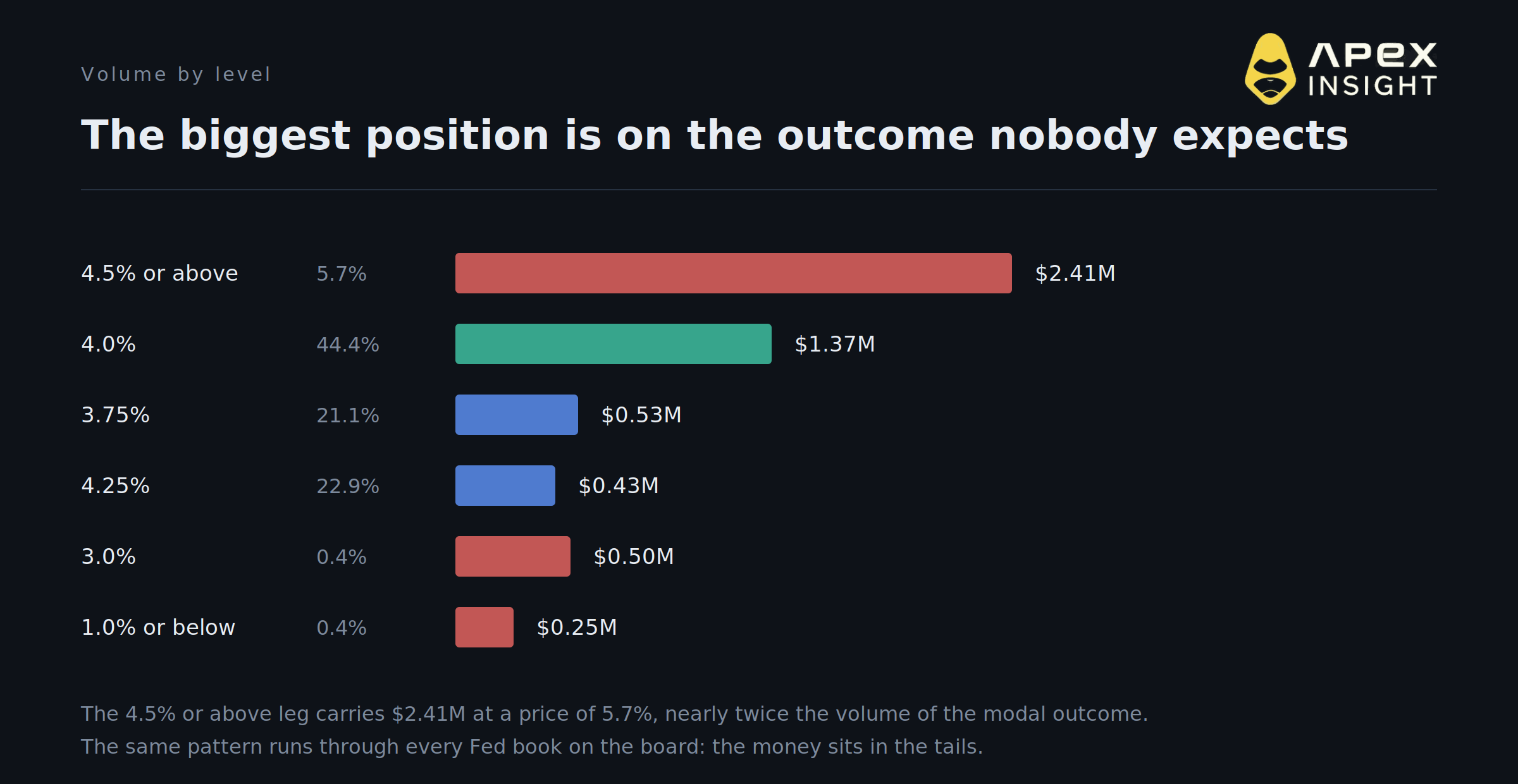
The 4.5 percent or above leg carries $2.41M and prices at 5.7 percent. The modal outcome at 4.0 percent carries $1.37M.
So the largest single position in this book sits on an outcome the market gives one chance in eighteen, and it holds nearly twice the volume of the outcome it actually expects.
That is the third time this week this pattern has appeared. In the September book the most traded leg is a rate cut priced at 0.4 percent. In the cuts book, seven legs priced at 0.1 percent hold roughly $44M. Here the tail outruns the centre.
If you take one transferable lesson from this series, it is that traded volume in a prediction market is a record of where a price has travelled and where people bought cheap optionality. It is not a measure of what the market believes.
5. The easing side of the board is empty
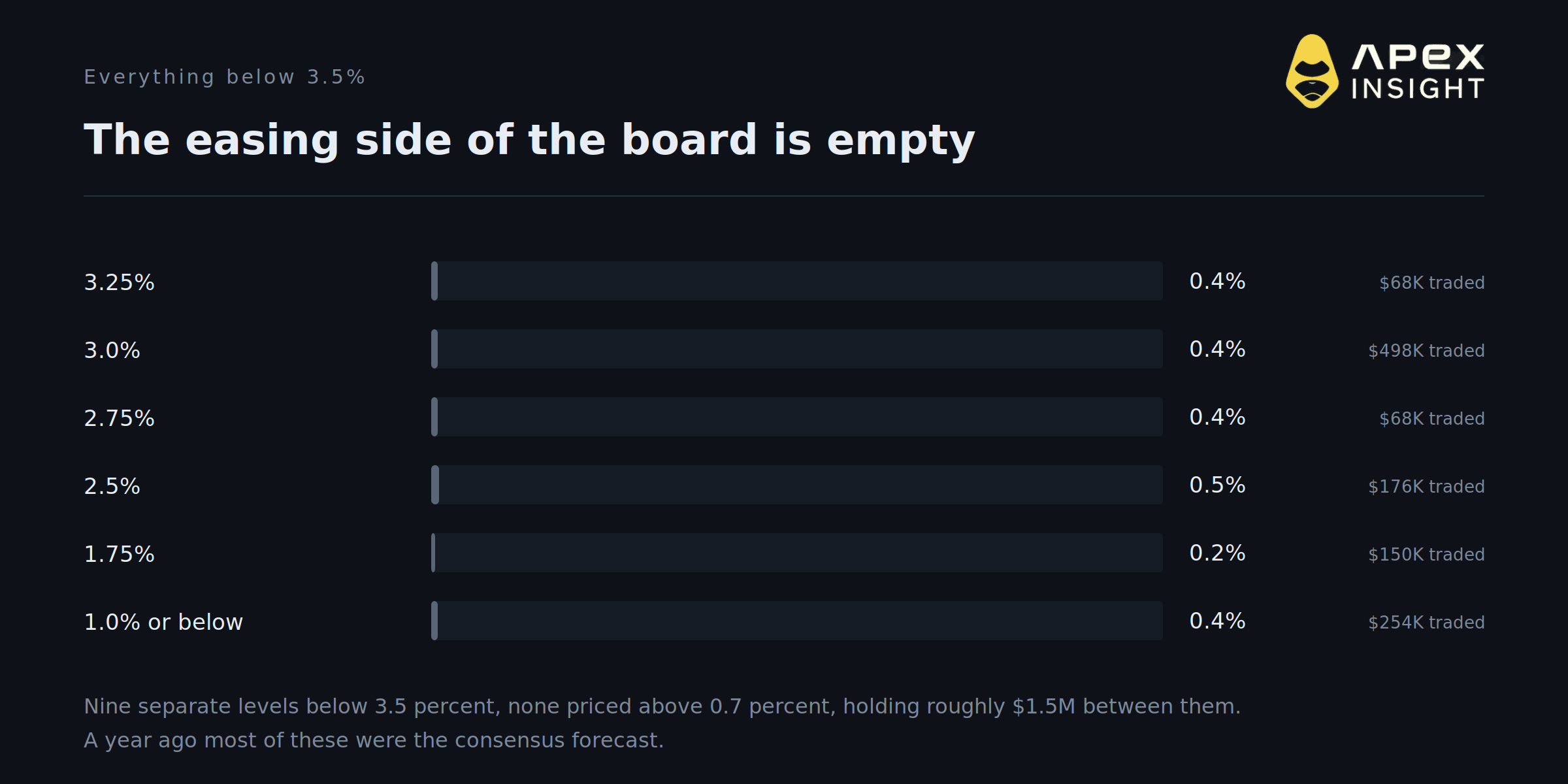
Below 3.5 percent there are nine separate levels on the board. Not one prices above 0.7 percent. Between them they hold roughly $1.5M.
A year ago, most of those levels were the consensus forecast. Three or four cuts through 2026 was the median sell-side view, which would put the rate somewhere between 2.75 and 3.0 percent by December. Those two levels now price at 0.4 percent each.
Three books, one conclusion
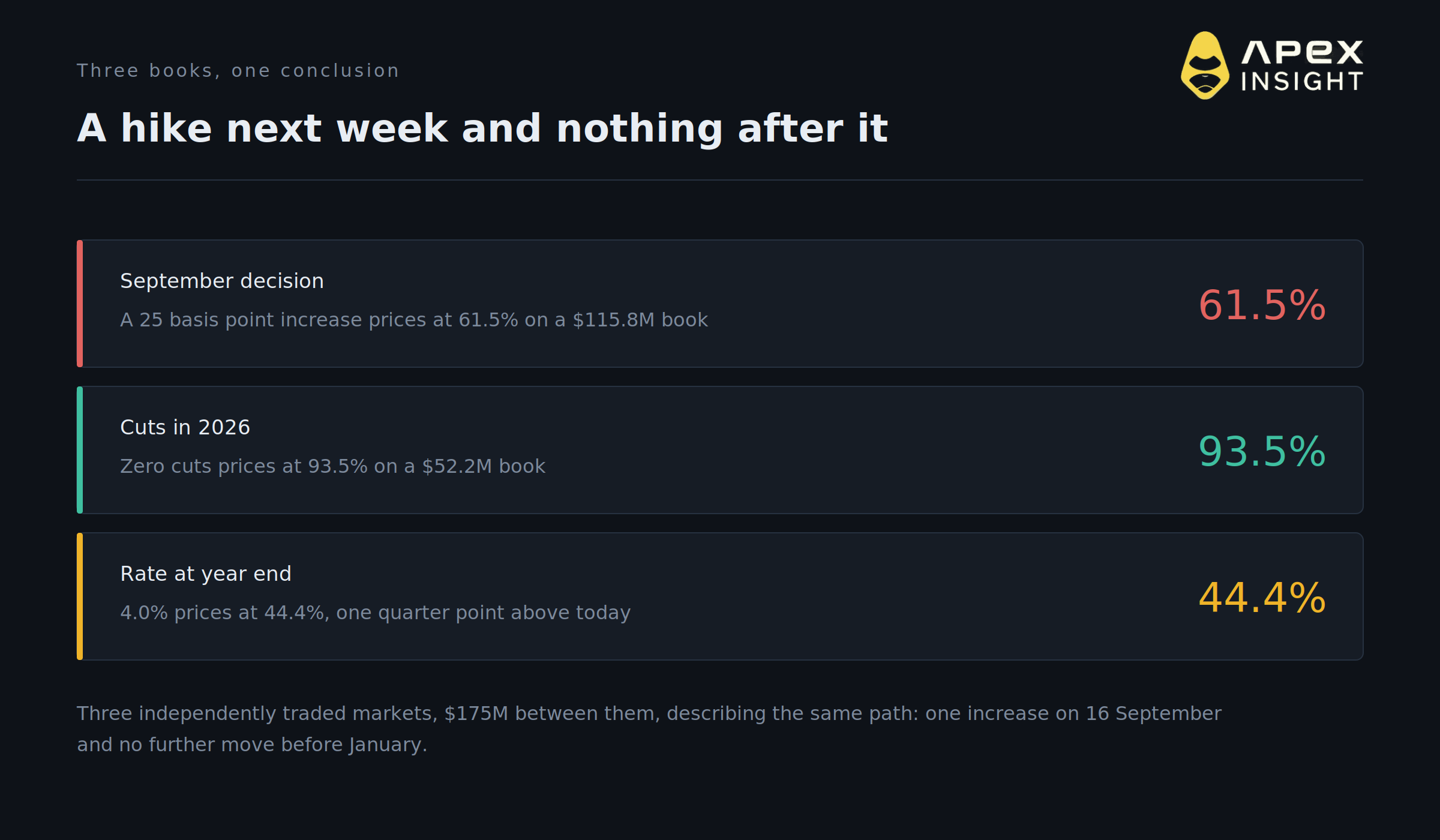
Read the three markets together and they describe a single path. September prices a 25 basis point increase at 61.5 percent. The cuts book prices zero cuts in 2026 at 93.5 percent. The year-end book prices 4.0 percent at 44.4 percent.
One increase on 16 September, and no further move before January. Three independently traded markets, roughly $175M between them, arriving at the same place.
Agreement across separate books with separate participants is the strongest form of evidence this format offers. It is also what makes the September decision worth watching closely: if the Fed holds, all three of these have to reprice at once.
Where this goes
Tomorrow the series traces the mechanism, from a closed shipping lane to an oil price to a rate decision, and asks why the one variable that has driven all of this is the one almost nobody in crypto is watching.
Trade it
Political Markets Season is live on ApeX Omni. Four stages, four political markets, a 6,000 USDT prize pool. Stage 1 is the Fed Decision in September, running to 13 September 00:00 UTC.
Spot prediction trading on Polymarket order books. No leverage, no liquidation, no KYC. Trade the odds, not the outcome.
We appreciate your continued support.
Published by ApeX. For informational and educational purposes only. Not investment advice, and not a forecast or endorsement of any policy outcome. Trading involves risk, including total loss.